A Place to Pause: The Planning Levers Putting Benches Back on London’s Streets
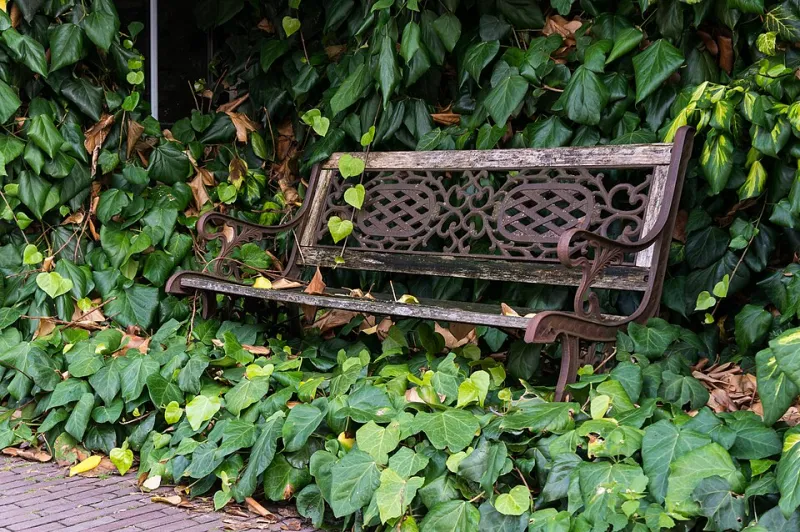
Photo: Dietmar Rabich, CC BY-SA 4.0, via Wikimedia Commons
On a high street in outer London, the removal of three benches outside a parade of shops rarely registers in the minutes of a council meeting. Yet the decision can ripple through the daily lives of older residents, people with mobility impairments, parents with small children and anyone carrying shopping further than they intended. Across the capital, the humble bench is moving from the margins of street furniture to the centre of planning negotiations—and the terms of that shift are being set now.
From Decoration to Infrastructure
For years, benches were treated as amenity dressing: something a developer might provide, a business improvement district might sponsor, or a highway maintenance team might quietly remove when repairs became inconvenient. In 2026, that assumption is being tested. Boroughs reviewing their public-realm strategies are increasingly asked to account for resting points as part of accessibility and high-street recovery policy. The argument is straightforward: if a street is designed only for movement, it excludes anyone who cannot move continuously without pause.
Planning departments are responding in different ways. Some are writing bench provision into site-specific planning conditions, requiring developers to install and maintain seating as part of new commercial or residential schemes. Others are using section 106 agreements or public-realm contributions to fund benches beyond the red line of a development. A third group is revisiting street-furniture contracts, where benches have sometimes been removed to reduce maintenance liabilities or to clear space for bins, cycle parking and delivery bays.
The Negotiation Behind the Seat
The result is a patchwork. A new bench outside a regenerated station may arrive with a maintenance schedule and a design specification attached to a planning permission, while a bench fifty metres away may depend on a separate highways budget that has no line for seating. Residents rarely see the difference, but the distinction matters. A bench delivered through a planning obligation is, in effect, a private contribution to a public good. A bench funded through a council’s public-realm budget is a recurring commitment, with cleaning, repair and replacement costs attached.
This is where the 2026 debate becomes sharper. Accessibility groups and age-friendly networks argue that resting points should be planned as a network, not as isolated gifts from developers. They point out that a bench is only useful if it is in the right place, reachable by a level footway, and maintained. A bench tucked behind a loading bay or placed where it attracts antisocial behaviour can become a liability rather than an asset. The London City News has spoken to officers who describe a familiar tension: the planning condition secures the bench, but the revenue budget struggles to keep it.
High Streets and the Economics of Staying Put
High-street recovery groups have a different but related interest. A person who can sit down is more likely to spend time on a high street, and time is the raw material of local trade. Market traders, cafés and shops benefit when older shoppers feel able to make the trip. Yet the same groups are wary of treating benches as a substitute for wider investment. A new bench does not fix a broken pavement, a poor bus service or a vacant unit. It does, however, signal that a street is intended for people as well as throughput.
Some boroughs are now linking bench provision to public-realm audits, counting existing seats, assessing condition and mapping gaps. The exercise sounds bureaucratic, but it produces a different kind of decision. Instead of asking whether a development can accommodate a bench, officers can ask where a network of resting points is missing. That shift—from site-by-site bargaining to area-wide planning—is the quiet story of 2026.
Who Pays, Who Maintains
The unresolved question is money. A planning condition can secure capital for a bench, but it rarely secures a long-term maintenance budget. Street-furniture contracts can include cleaning and repair, but they are often procured on price. Public-realm budgets are under pressure, and benches compete with lighting, planting, waste bins and road safety measures. The risk is that a bench is installed with fanfare and then quietly removed when the maintenance bill arrives.
Councils are experimenting with solutions. Some are adopting design standards that reduce vandalism and repair costs. Others are working with business improvement districts or community groups to adopt benches, though adoption arrangements raise questions about long-term accountability. A few are exploring how developer contributions can include an endowment for maintenance, an approach that is easier to agree in large schemes than small ones.
A Small Object With a Large Question
The bench is a small object, but it exposes a larger question about how London governs its public realm. Is street furniture a public service, a development deliverable, or a discretionary extra? The answer in 2026 depends on which borough, which street and which budget is in play. Accessibility groups are pressing for a consistent baseline: resting points as part of the public highway, planned and funded accordingly. Developers are wary of new obligations. Highway teams are caught between maintenance pressures and public expectations.
What is clear is that the decisions being taken now will determine who gets to rest, where, and at whose cost. A planning condition can put a bench on the pavement. It cannot, by itself, make the street welcoming. That requires a wider settlement about public-realm funding—and a recognition that a place to pause is not a luxury but a piece of urban infrastructure.