A Place at the Kerb: The Rules That Decide Who Sells on London’s High Streets
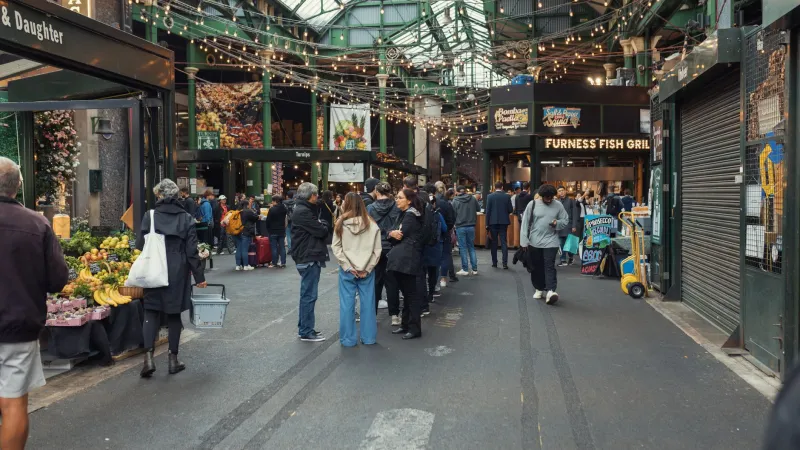
On a wet Saturday in November, the difference between a busy London high street and a quiet one can be a row of gazebos. A fruit stall, a baker, a trader selling phone cases and a queue for coffee will not solve a structural vacancy problem, but they change how a parade feels. They also depend on a set of local decisions that rarely attract attention: who is allowed to trade, where, for how long and on what terms.
Street trading is one of the most localised functions in London government. Boroughs adopt different regimes for designated streets, pitches and market places. Some license individual traders directly; others rely on market operators, business improvement districts or arm’s-length companies. Fees vary, waiting lists vary and the criteria used to allocate a prime corner can be as important as any high street fund. In late 2026, with councils under pressure to show that town centres are recovering, those administrative choices are doing more work than they are usually given credit for.
A licence by another name
The first complication is terminology. A street trading licence is not the same as a market pitch agreement, and neither is the same as a casual trader’s daily permit. A borough may designate a street for licensed trading, prohibit it altogether or allow it only under a market operator’s control. The result is a patchwork that makes sense locally but is difficult for new traders to navigate.
Fees reflect that patchwork. Some councils publish a simple annual charge; others combine pitch fees with service charges for waste, storage or electricity. A trader comparing two boroughs may find that the headline fee is lower in one place but the additional costs and trading restrictions make it less attractive. For a small business testing a high street for the first time, those details determine whether the economics work at all.
There is also the question of tenure. A permanent pitch on a historic market can be a valuable asset, sometimes passed between traders or sold as part of a business. A casual pitch offers flexibility but little security. Between those poles sit temporary licences, event pitches and pop-up permissions tied to regeneration schemes. Each arrangement carries a different message about how open a borough is to new entrants.
The waiting list as policy
Waiting lists are often presented as a neutral administrative fact. In practice, they are policy. A long list can protect existing traders and preserve the character of a market. It can also shut out new businesses, particularly those without the capital to wait or the connections to know when a pitch might become available.
Some boroughs publish their allocation criteria; others provide limited information. Priority may be given to local residents, to traders selling particular categories of goods or to applicants who can demonstrate a track record. Casual pitches may be allocated on the day, by rotation or by officer discretion. These are not merely procedural matters. They decide whether a high street can diversify its offer or whether it remains reliant on the same small group of traders.
Transparency matters because street trading is a low-cost route into self-employment. It allows a cook, a maker or a retailer to test a product without committing to a shop lease. If the route is effectively closed by unclear rules, a council loses a tool for supporting local enterprise. If it is too open, existing traders may face unfair competition and the market can lose the coherence that makes it worth visiting.
Operators, terms and the negotiation
Many London markets are not run directly by the council. They may be managed by a market operator, a tenant organisation or a council-owned company. The operator sets pitch fees, opening hours and allocation rules within the terms of its agreement. Traders negotiate not only with the council but with the body that runs the market day to day.
That layering can bring professional management and investment. It can also obscure accountability. When a pitch fee rises, traders may not know whether the money is covering waste collection, staff costs, debt repayment or a surplus transferred back to the council. When a market is refurbished, the promise of more footfall may come with higher charges and stricter rules on presentation. The negotiation is rarely a simple dispute between council and trader; it involves several parties with different incentives.
Councils argue that fees must cover the cost of managing trading, cleaning and enforcement. Traders point out that a pitch is only viable if the surrounding high street has enough footfall and if the costs are predictable. The balance is not easy to strike, especially when local authority budgets remain tight and high street regeneration funding is time-limited.
What revival looks like from a stall
High street revival is often discussed in terms of masterplans, vacant unit rates and public realm improvements. Street trading sits at the more granular end of that agenda. It can activate a empty parade, support a market tradition or provide a reason to visit a town centre on a weekday. It can also create clutter, conflict over pavement space and enforcement burdens if it is not managed clearly.
The most useful reforms are often unglamorous. Publishing fee schedules and allocation criteria in one place would help. So would clearer information on waiting lists and casual pitches. Boroughs could review whether their rules unintentionally favour established traders over new entrants, and whether the costs of trading are transparent enough for small businesses to plan.
None of this amounts to a single London-wide answer. The capital’s high streets are too different for that, and local knowledge is a genuine advantage. But the principles are common: fair access, clear costs and a realistic understanding of what a pitch can contribute. As the Christmas trading season begins, the queue for a stall is a small window into how each borough sees its high street. The decisions made at the kerb will help determine whether revival is something that happens to a place or something that is built there, one pitch at a time.