The Long Way to School: How SEND Transport Became a Line London’s Budgets Cannot Hold
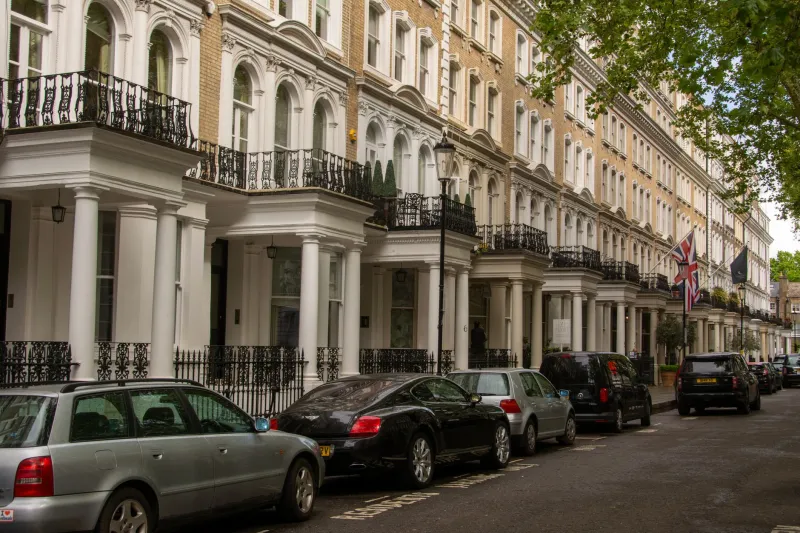
Shortly before eight each weekday morning, a private hire car pulls up outside a terraced house in an inner-London borough. A driver waits, an escort checks a folder, and a child is helped into the back seat for a journey of perhaps forty minutes to a school in a neighbouring authority. It is an ordinary scene, repeated thousands of times across the capital. It is also one of the least scrutinised items of expenditure in local government.
Home-to-school transport for children with special educational needs and disabilities (SEND) has moved from a modest ancillary service to a structural pressure on borough budgets. The reasons are cumulative rather than dramatic: rising identification of need, a shortage of specialist places close to home, a constrained private hire market, and a statutory duty that leaves councils with limited room to say no.
A duty, not a discretionary extra
The legal position is often misdescribed as discretionary. Under the Education Act 1996, as amended, a local authority must arrange free home-to-school transport where it considers it necessary to secure education for a child of compulsory school age, and must do so for pupils who cannot reasonably be expected to walk because of their special educational needs, a disability or mobility difficulties. Where a child is entitled, the authority must also provide travel arrangements that are suitable and free of charge.
The practical question is not whether the duty exists but where its edges fall. Borough officers must judge whether a placement is the nearest suitable school, whether a journey is reasonable in distance and duration, and whether a parent’s preferred provision changes the analysis. Each judgement is contestable, and many are contested.
What the contracts actually buy
London boroughs buy this transport in a fragmented market. Most operate framework agreements or dynamic purchasing systems covering private hire vehicles, wheelchair-accessible cars, minibuses, coaches and, for a small number of children, taxis with trained escorts. Contracts are typically let in lots by vehicle type and sometimes by sub-region, with call-off arrangements that let officers book journeys as placements are confirmed — often weeks before, sometimes days.
That model has advantages: it disperses risk and allows boroughs to buy capacity without owning a fleet. It also embeds the cost drivers. Private hire operators in London face licensing requirements, congestion and emissions charges, insurance premiums and persistent driver shortages, all of which are passed through in rates. Escorted journeys are more expensive again, because a second adult must be paid for the whole run, not just the time spent with the child.
The 2026-27 contract round has been shaped by two quieter factors. First, several multi-year frameworks let in earlier in the decade are reaching renewal, at a moment when operators are pricing in higher wage and compliance costs. Second, boroughs are increasingly writing route-efficiency obligations and vehicle standards into specifications — a sensible economy that nonetheless narrows the pool of bidders.
The eligibility line
Every child in a car or coach has first passed through an assessment. Typically a transport officer, sometimes with an educational psychologist or a school’s SEN co-ordinator, considers the distance, the nature of the child’s needs, the availability of a parent to accompany them, and whether independent travel training could reasonably be provided instead.
Those decisions cluster at particular points in the year: when school places are confirmed in the spring, when placements break down, and when families move. They are also the point at which budgets leak. A child placed out of borough — often because no local specialist place exists — can generate a journey of an hour each way, and an annual cost that dwarfs the fees of a nearby mainstream school.
Parents who disagree can seek mediation and, ultimately, appeal to the First-tier Tribunal. Transport itself is not usually the tribunal’s subject, but placement decisions are, and a successful appeal can retroactively reshape a child’s journey. Boroughs therefore find themselves funding the consequences of a system-wide shortage of specialist places through a transport budget designed for something else.
The geography of a vulnerable childhood
It is worth stating plainly what the spreadsheet describes. For some children, the school run involves crossing three boroughs before nine o’clock. Consistency of driver and escort matters enormously to children with autism or complex health needs; a change of operator can unsettle a placement. Late arrivals, caused by traffic on the North Circular or a missed collection, fall on the school to absorb.
This is where transport policy meets the wider SEND system. A journey of ninety minutes each way is a factor in attendance, in behaviour, and in whether a placement holds. Councils that cut a route to save money may find the saving reversed in other budgets: alternative provision, social care, or a fresh placement.
The arithmetic boroughs are working with
Transport for pupils with SEND is funded from the general fund rather than the high needs block of the dedicated schools grant, which means it sits alongside waste collection and adult social care in the competition for council tax. Finance officers describe it as one of the few demand-led lines that can grow by double-digit percentages without any change in policy — simply because more children are entitled and more placements are distant.
Mitigations are being tried. Route optimisation software, shared vehicles where needs allow, travel training for older pupils, personal transport budgets paid to families, and hubs where several children from one area are collected together. Some boroughs have renegotiated rates mid-contract; others have tightened the evidence required at assessment. Each carries a trade-off between cost and the reasonableness of the journey, and each is vulnerable to legal challenge.
The decisions that are rarely named
What makes this area distinctive is how little of it is debated in public. Contract awards appear in procurement notices; eligibility criteria sit in policy documents; appeals are confidential. The result is a sizeable share of council spending that is decided by officers applying guidance, and reviewed by families one case at a time.
For Londoners, the practical question is not whether the duty should exist — it does — but how boroughs reconcile it with the places they can offer and the money they have. That reconciliation is happening now, in 2026-27 contracts, in assessment panels and in tribunal rooms. The morning cars outside the terraced houses are the visible end of it.