The Green Ledger: What London’s Allotment Queues Reveal About Council Land
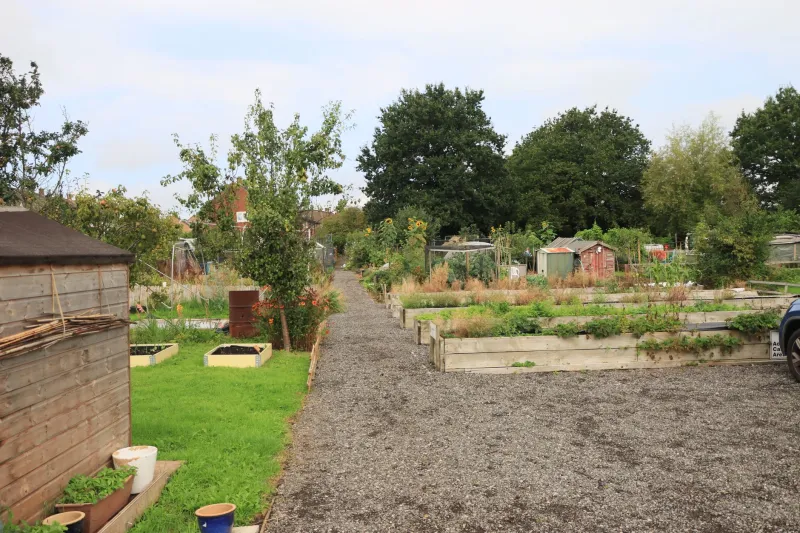
In a capital where land values are parsed in premiums and planning obligations, the allotment waiting list can seem like a quaint administrative curiosity. It is not. A queue that runs for years, and in some boroughs for more than a decade, is a slow-motion record of how London councils choose to use small parcels of public land. The plot itself may be modest. The decision behind it is not.
A duty without a deadline
Councils have long-standing obligations to provide allotments where there is demand. The statutory framework stretches back to the early twentieth century, and it still shapes how town halls respond when residents ask for land to grow food. But the duty is not a guarantee of a plot within a reasonable period. It is a responsibility to assess need and, in broad terms, to make provision. That gap between principle and practice is where waiting lists grow.
In 2026, many London authorities are reviewing allotment rents, often alongside wider decisions about parks, grounds maintenance and property. The sums involved are small compared with social care or transport, but they are symbolic. An allotment rent review tests whether a council sees plots as a public service, a cost-recovery exercise or a land asset with alternative uses. The answer is rarely stated plainly in a committee report.
When a plot becomes a political football
Allotments sit at an awkward intersection of policy. They are open space, but not quite parks. They are food production, but not commercial agriculture. They are community infrastructure, but they rarely attract the same attention as libraries or leisure centres. When a borough looks at a surplus site, an underused depot or a patch of green belt at the edge of a housing target, the allotment can become a test case for much larger arguments about land.
Some councils have pursued plot reclamation drives, clearing overgrown sites and tightening tenancy conditions where plots have been left uncultivated. This is often presented as fairness: a plot held but unused denies a place to someone on the list. It is also a practical response to maintenance costs. Yet reclamation can be contentious. Older tenants, volunteer groups and site associations may argue that enforcement is uneven, or that the real problem is investment in water, paths and drainage rather than the people who hold the keys.
The broader pressure is housing. London’s planning system is geared towards delivering homes, and every borough is under instruction to find sites. Allotments are not automatically protected from development, although disposing of statutory allotment land usually requires consent and can trigger local opposition. The result is a quiet form of land rationing: a site may remain green because it is politically difficult to build on, not because the council has a clear food-growing strategy. The queue then becomes a placeholder for a decision that has been deferred.
The rent review test
Rent reviews in 2026 are likely to be scrutinised more closely than usual. Allotment rents have historically been low, and many tenants value them precisely because they offer affordable access to outdoor space. But councils face rising costs for water, insurance, fencing and grounds maintenance. A modest increase may be necessary to keep sites usable. A sharp one can push out the very households the service is meant to support.
The fairest reviews tend to distinguish between cost recovery and income generation. They also consider concessions for older residents, disabled tenants and those on low incomes. Where councils publish a clear breakdown of what the rent pays for, the debate is calmer. Where a rent rise arrives without explanation, it feeds a suspicion that allotments are being quietly repositioned as a revenue line or a development opportunity.
What the queue actually measures
The length of a waiting list is often treated as a simple measure of popularity. It is more accurately a measure of supply. London has a finite stock of accessible green space, and new allotment provision is rarely large enough to meet demand. Some developments include community growing spaces through planning agreements, but these are often smaller than traditional plots and may not be managed by the council. They add variety to the offer, not a solution to the queue.
Waiting lists also reveal inequality. Demand is not evenly spread. Boroughs with more flats, less private garden space and higher population density tend to face the strongest pressure. The people waiting are not a single group: they include families without gardens, older residents seeking gentle exercise, and community groups wanting to grow food for local projects. A council that only counts names on a list misses the different reasons people are there.
The decision ahead
The allotment question is not really about whether Londoners like gardening. It is about whether councils are willing to treat small sites as part of the city’s civic infrastructure. That means transparent waiting-list data, realistic maintenance budgets and a clear policy on when a plot can be reclaimed or reallocated. It also means being honest about the trade-offs with housing and other open space.
In 2026, the green ledger is still being written site by site. A rent review here, a reclamation drive there, a planning application that quietly tests the boundaries. The queue may move slowly, but it is not standing still. It is recording the choices London’s boroughs make when a scrap of green space becomes a political football — and who gets to put down roots.