No Relief in Sight: The Council Arithmetic Behind London’s Disappearing Public Toilets
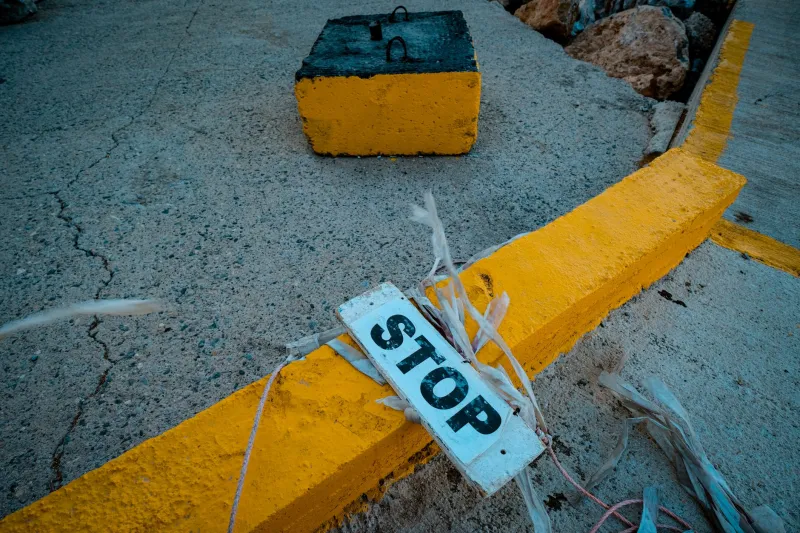
In a capital that presents itself as world-class, access to a public toilet is increasingly a matter of postcode. The closure of a convenience block rarely prompts a press release. More often it is recorded as a temporary measure after repeated vandalism, a staffing problem or a maintenance bill that cannot be met from the current budget. Months later, the temporary notice is still there, the door is still locked and another stretch of pavement has lost a basic piece of civic infrastructure.
That pattern is now familiar across London. The decisions are made borough by borough, usually within wider reviews of property, parks and street services. They are rarely presented as a statement about who the city is for. Yet that is precisely what they amount to. A public toilet is not a luxury addition to the urban scene. It is part of the minimum equipment of a city that expects people to leave home, travel, shop and spend time in public space.
A service that is easy to cut
Public conveniences sit in an awkward corner of local government. Councils have powers to provide them, but the provision is not generally treated as a statutory duty in the way that social care or waste collection is. That gives authorities discretion when budgets are under pressure. It also makes toilets vulnerable to a particular kind of accounting: the savings are visible and immediate, while the costs of closure are diffuse and fall elsewhere.
The running costs are real. Cleaning, staffing, repairs, security, utilities and insurance all recur. Older blocks carry capital backlogs, from drainage and tiling to accessible fittings and fire safety. A facility that was designed for a different era of footfall can become expensive to keep open, especially where antisocial behaviour has made it a focus for police and council officers. Faced with a choice between a toilet block and a library hours review, members and officers know which decision will attract less public attention.
But the arithmetic is incomplete. A closed toilet does not remove the need. It relocates it, often to the high street, the library, the park café or the hospital. The saving lands in one council budget line; the cost lands on residents, businesses and public services that did not choose the closure.
Who pays when the door is locked
The impact is not evenly spread. Disabled people, older residents, parents with young children, pregnant women, people with medical conditions and those who work outdoors or on the move all plan their days around access to a toilet. For some, the absence of a facility is not an inconvenience but a reason to stay at home. That has consequences for participation, employment, shopping and health.
Visitors and tourists are affected too, particularly in areas where footfall is high but local authority resources are thin. So are rough sleepers and people whose use of public space is already precarious. The closure of a toilet can turn a difficult day into an impossible one.
Digital alternatives help at the margins. Mapping apps and online directories allow people to find facilities in cafes, stations and public buildings. Community toilet schemes, in which councils pay or support businesses to open their facilities to the public, have been adopted in several boroughs. These arrangements can be sensible: they use existing plumbing, support high streets and cost less than building new blocks.
Yet they are not a like-for-like replacement. Opening hours depend on the business. Signage can be inconsistent. Accessibility varies. Some premises are not suited to the needs of disabled people or families. A scheme that works on a Saturday afternoon may offer nothing on a Sunday evening. And when a participating business changes hands or decides the arrangement is no longer worth it, the facility disappears without any council decision at all.
The quiet cost of a temporary closure
Closure is often presented as reversible. In practice, it rarely is. Once a block has been closed for months, vandalism and damp set in. Security costs rise. The building may acquire a different status in the council’s asset plan. Reopening then requires capital investment that the authority did not budget for, making permanent closure look like the only realistic option.
There are also legal and practical complications. Some sites are subject to covenants, leases or planning conditions. Some are attached to parks or other public buildings where the council remains responsible for maintenance even if the toilets are shut. Selling the land may raise a capital receipt, but it also removes any future ability to provide the service on that site. The decision is not simply about a door and a lock; it is about the disposal of public infrastructure.
Campaigners have pressed boroughs for clearer data on closures, reopening costs and the number of accessible facilities still in operation. The picture is fragmented because there is no single live register covering all London providers. That makes it difficult for residents to hold councils to a consistent standard, and difficult for councils to learn from one another.
A case for a London-wide standard
Londoners do not experience the city as a set of separate boroughs. They cross boundaries for work, care, shopping and leisure. A toilet strategy that stops at the borough border may be rational for an individual authority but poor for the travelling public. A more coherent approach would not require a new bureaucracy. It could begin with a shared map, common signage and minimum access standards, including Changing Places facilities where need is greatest.
Funding is the harder question. Boroughs have been managing reduced resources for years, and public toilets compete with services that carry legal duties. A London-wide conversation would need to be honest about that trade-off rather than pretending that apps and community schemes can fill every gap. Where a facility is genuinely well used and accessible, keeping it open may be better value than closing it and managing the consequences elsewhere.
Public toilets are not a glamorous subject, which is partly why they are easy to close quietly. But they are a test of how the capital treats public space and public need. The decisions being made now will determine whether relief is available to everyone, or whether it becomes another service that Londoners are expected to find for themselves.