Nature, Priced: The Credit Market Quietly Reshaping London’s Planning Decisions
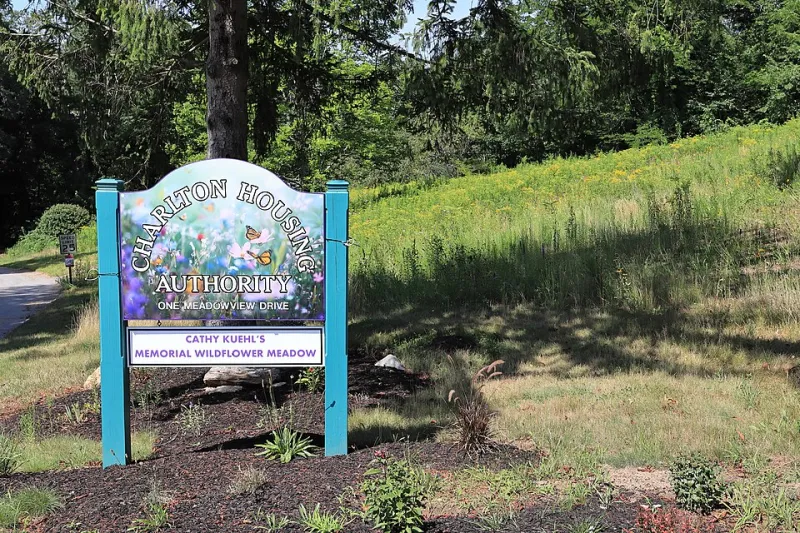
Photo: Peter Cooper Jr., CC0, via Wikimedia Commons
On a wet November morning, a planning committee in an outer London borough approves 180 homes on a former depot site. The report runs to 140 pages. Tucked into the conditions is a requirement that the scheme deliver a 10 per cent increase in biodiversity — and a note that the developer has already agreed to buy 24 habitat units from a registered bank in the home counties. The vote is unanimous. Nobody in the room asks the question that now sits beneath a growing share of London’s planning decisions: what, exactly, has been bought?
A market written into the system
Biodiversity net gain is not a voluntary gesture. Under the Environment Act 2021, major developments in England have had to deliver a measurable 10 per cent gain since February 2024, with small sites following that spring. The rules establish a strict sequence: avoid harm first, then mitigate on site, then — only if necessary — buy off-site units. Statutory credits, sold by the government, are the last resort.
For London’s planning authorities, this has created an unfamiliar duty. Borough planning officers must now assess a biodiversity gain plan alongside the usual transport, design and affordable housing tests. They must satisfy themselves that a developer’s promised units are real, additional and secure for at least 30 years. In practice, many are relying on a market that has emerged faster than the guidance around it.
Who sells, and who buys
The sellers fall into three broad groups. Private landowners and estates are converting marginal farmland, scrub and former mineral sites into habitat banks. Conservation bodies and wildlife trusts are doing the same on managed reserves, often through arms-length trading arms. And a small but growing number of councils are examining their own parks, country parks and green belt holdings as potential credit generators.
Intermediaries have appeared alongside them: brokers, ecological consultancies and habitat-bank operators who package units and handle the paperwork. The national biodiversity register, maintained by Natural England, lists the banks that have been formally registered. It is not yet a deep market, but it is a recognisable one.
London’s geography shapes who buys. Inner boroughs such as Islington, Hackney and Westminster have almost no spare land capable of generating significant units. Their developers are natural purchasers. Outer boroughs with green belt — Bromley, Bexley, Hillingdon, Enfield — are more likely to host habitat banks, though not always within their own boundaries. A scheme in Tower Hamlets may end up offsetting in Essex; a scheme in Barnet may look to Hertfordshire.
The price of a unit
There is no single price. Units are priced by habitat type, distinctiveness and condition, and by location. Industry quotes for London and the home counties commonly fall between £15,000 and £30,000 per unit, with premium sites — reedbed, species-rich grassland, ancient woodland restoration — commanding more. Statutory credits, intended as a last resort, are priced markedly higher.
For a 200-home scheme needing 20 units, that is a bill of £300,000 to £600,000. Against total build costs, it is not enough to stop a scheme. That is precisely the concern for some planning observers: the charge is large enough to be visible in a viability appraisal but small enough that developers will pay it rather than redesign a layout to retain a hedge or a pond.
The 30-year management obligation adds a second layer of cost. Habitat banks must fund monitoring, maintenance and reporting for three decades. Some operators build that into the unit price; others charge separate management fees. Conservation covenants, introduced under the same Act, are meant to bind subsequent landowners to the agreement.
Paper habitat, or real nature?
The central risk is additionality. A unit should represent nature that would not have existed otherwise. If a bank sells credits from land that was already species-rich, or from management that was already funded, the system produces paperwork rather than wildlife. Natural England’s register is a start, but it is not a quality guarantee, and borough ecology teams are thin.
Enforcement is the harder question. A planning condition can require a biodiversity gain plan, but monitoring a 30-year management agreement is not a task most London planning departments are resourced for. Several boroughs now insist on local evidence, site visits and independent ecological sign-off. Others rely on the responsible body named in the covenant. The gap between the two approaches is likely to become a live issue as the first tranches of units mature.
What boroughs are doing
A handful of London authorities are moving from regulator to participant. Some are assessing whether council-owned land could supply units, using the income to fund park maintenance. Others are working through London Councils and the Greater London Authority on strategic approaches, arguing that a borough-level market is too thin and too easily gamed.
The capital’s local nature recovery strategies, now taking shape across London, are meant to give the market a spatial steer — identifying where habitat creation would deliver the most benefit. Whether developers follow those maps, or simply buy the cheapest compliant units, will determine whether net gain becomes a planning tool or a accounting exercise.
The 2026 ledger
Two years into mandatory net gain, the market is maturing without being settled. Prices are stabilising, the register is filling, and planning committees are growing used to the language of units and gains. But the deeper question remains unresolved: is London’s biodiversity net gain delivering nature in London, or exporting it to the home counties while the capital’s own green spaces remain under pressure?
For boroughs, the answer will be found in the detail of planning conditions, the strength of local evidence and the willingness to refuse a gain plan that looks good on paper. The market is here. The governance is still catching up.