Kerbside Arithmetic: The Local Decisions Rationing London’s Delivery Space
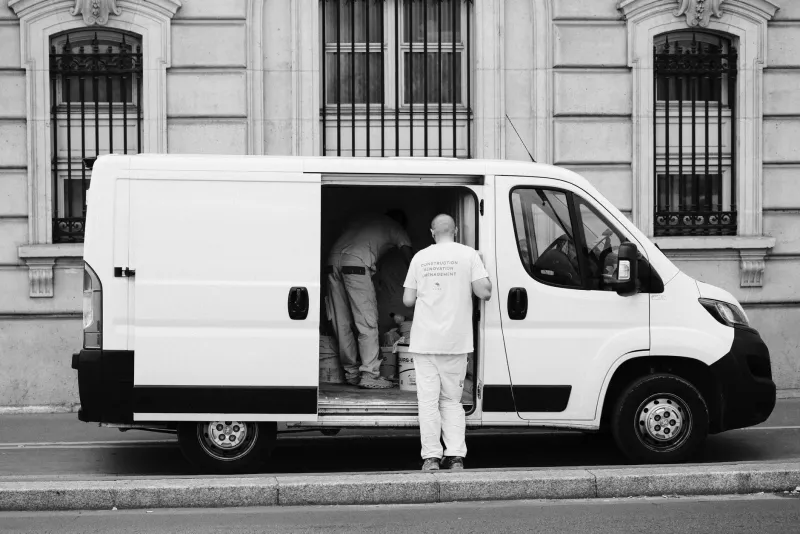
At eight o’clock on a London high street, the argument is already under way. A van driver circles for a loading bay that is occupied by a parked car. A courier on a cargo bike weaves between pedestrians. A shop manager watches a delivery roll past because there is nowhere legal to stop. Behind all of them is a council parking schedule that decides, in unglamorous detail, who may use a few metres of kerb and when.
The delivery boom has made that schedule a front-line document. Parcels, food orders and business supplies now compete for road space that was designed around a different retail economy. Boroughs are responding with pilots, timed delivery windows, camera enforcement and micro-consolidation hubs. None of these decisions is national. Each is local, technical and increasingly consequential.
From parking schedules to high street policy
A loading bay is created through a traffic regulation order. The order sets the hours, the vehicle classes allowed and the penalties for misuse. For most residents, this is invisible bureaucracy. For a shop, it can determine whether stock arrives on time. For a delivery company, it can determine whether a route is viable. For a disabled resident, a bay that is blocked or removed can determine whether a high street is usable at all.
Councils have started to treat the kerb as a strategic asset rather than a residual space. Several inner London boroughs are reviewing parking and kerbside strategies together, recognising that a decision to convert a bay into a cycle hangar, a parklet or a bus stop is also a decision about freight. Outer London town centres are running their own experiments, often with less traffic pressure but sharper concerns about shop vacancy and local access.
The common thread is rationing. London has limited kerb space and rising demand for it. The question is not whether to ration but how, and in whose interest.
The pilot landscape
One approach is temporal: reserving bays for deliveries at particular times, then releasing them for other uses. A bay might be freight-only before 11am, loading-only for businesses in the afternoon and available for short-stay parking in the evening. The logic is to match supply with peak demand. The risk is that a window that suits a supermarket delivery does not suit a small independent shop receiving one pallet.
Another approach is technological. Camera enforcement has become cheaper and more common, allowing councils to penalise vehicles that stop in loading bays without observing the rules. Civil enforcement officers can issue penalties on the street, but cameras can cover more hours. Delivery companies say the result can be a fines culture in which drivers absorb penalties that reflect poor kerbside design rather than deliberate obstruction. Councils say camera evidence improves compliance and protects access.
A third approach is consolidation. Micro-hubs — small depots in railway arches, car parks or vacant units — allow parcels to be sorted close to the final address and delivered by cargo bike or on foot. The model works best where volumes are dense and distances are short. It is less suited to bulky goods or dispersed outer London addresses. Boroughs are also using business improvement districts to broker shared arrangements, though such schemes often depend on voluntary participation.
Enforcement, fairness and the shopkeeper’s view
The enforcement debate is really a fairness debate. A courier paid per parcel may treat a fine as a cost of doing business. A small shop may find that its supplier will not deliver at all if there is no bay. A resident may find that a once-clear pavement is now a parking space for scooters. Disability groups have consistently argued that kerbside policy must be assessed by whether it keeps pavements passable, not only by whether it speeds up deliveries.
Shops are divided. Some high street traders want more short-stay parking to bring customers by car. Others want delivery space protected so that stock can arrive. Many want both, which is precisely the problem. Councils are increasingly being asked to choose between competing claims on the same few metres.
The choices that will define 2026
The decisions ahead are not simply about vans. They are about the sort of high street London wants. A bay removed for a cycle lane may improve safety and reduce emissions, but it may also make a business rethink its supplier. A bay kept for loading may support local trade, but it may also encourage idling and obstruction. A camera may improve compliance, but it may also generate revenue from drivers with few alternatives.
The boroughs that manage this well will be those that publish clear kerbside strategies, consult businesses and residents before changing orders, and monitor whether the changes actually work. Cross-borough coordination matters too: a delivery route does not stop at a council boundary. Transport for London has a role in supporting consistency, but the legal levers remain local.
For anyone waiting for a delivery, the kerbside argument can feel remote. It is not. The next time a parcel arrives on time, or a shop runs out of stock, or a pavement is blocked by a parked van, the explanation may lie in a parking schedule agreed months earlier in a council committee room. The loading bay has become the place where London’s delivery economy and its high streets are being settled, one order at a time.