After the Last Train: London’s Nightlife Is Being Settled in Licensing Rooms
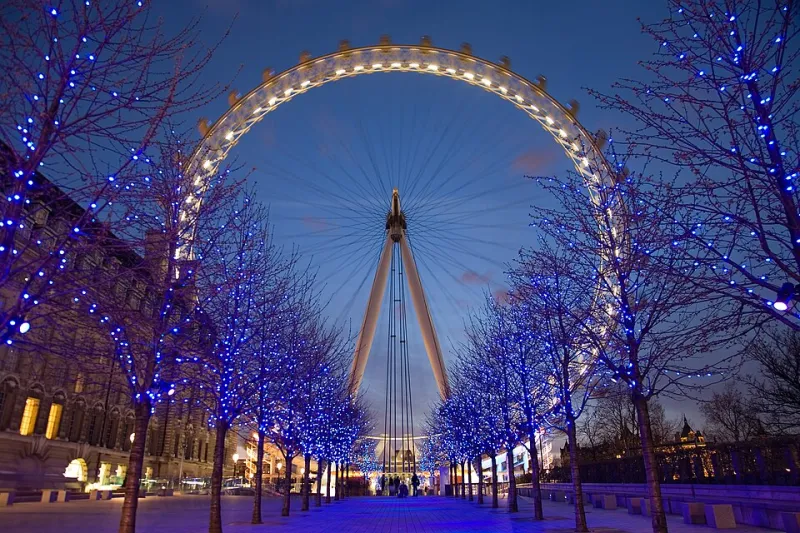
Photo: User:Diliff, CC BY 2.5, via Wikimedia Commons
At 1am on a Saturday, London’s late-night economy is tested not by the elegance of a bar or the draw of a club but by a sequence of administrative decisions made months earlier. A licensing committee has attached conditions to a premises licence. A noise team has logged complaints. A station supervisor has decided whether a gateline stays open. None of these choices is made in the same room, and that is the problem.
The capital’s night-time recovery in 2026 is not a single story. It is a patchwork of local settlements, each shaped by the priorities of a borough licensing authority, the sensitivity of nearby residents and the reliability of transport after midnight. The result is a sector that can feel simultaneously over-regulated and under-supported.
A patchwork of permissions
Licensing in London is a borough function. There is no London-wide night-time regulator. Each of the 32 boroughs and the City of London Corporation sets its own statement of licensing policy, its own cumulative impact assessment where evidence supports one, and its own enforcement priorities. Some authorities have designated cumulative impact zones in busy districts; others prefer conditions tailored to individual venues. A late-night levy, available under separate legislation, has been adopted by some authorities and rejected by others.
The detail varies sharply. A venue operator with sites in Westminster, Camden, Islington, Hackney, Southwark and Lambeth may face different expectations on door staff, capacity, dispersal, glass collection and closing times. That flexibility can be sensible. Local committees know their streets. But it also means that the answer to a simple question — can this venue open until 2am? — depends on which side of a borough boundary it sits.
For smaller operators, the cost of navigating that variation is real. Legal fees, licensing consultants and extended timetables can favour larger chains. For residents, inconsistency can undermine confidence that rules are being applied fairly. The system is local by design, but it is not always legible to the people it affects.
The noise file
Residents are not bystanders in this process. The statutory licensing objectives include the prevention of public nuisance and public safety, and noise complaints are treated as evidence. In boroughs where residential development has intensified around existing night-time districts, the collision is structural rather than personal. New flats sit above old pubs; new residents expect quiet; old venues expect to trade.
The agent of change principle, embedded in the London Plan, is meant to protect existing venues from new residential development. In practice, it depends on planning and licensing teams talking to each other. When they do not, a venue can find itself defending its licence against complaints from a building that was approved years after the venue opened. When they do, the result can be sensible acoustic design, management plans and realistic conditions.
The争议 is not whether residents deserve peace. They do. The question is whether the burden of managing the night-time economy falls disproportionately on a single venue, a single street or a single borough. Licensing committees are often asked to resolve tensions that originate in planning decisions, housing targets and transport gaps. They can attach conditions, but they cannot build a station entrance or soundproof a new apartment block.
The transport handbrake
Transport for London’s decisions on station staffing, train frequency and maintenance windows are not licensing decisions, but they determine whether a late licence is usable. The Night Tube runs on five lines on Friday and Saturday nights, with Night Overground services on part of the East London line. Its reliability depends on staffing, security and engineering access.
When a service is suspended or a station is closed, the 1am test fails not because a licence has been refused but because people cannot get home safely. Venues can employ door staff and marshals, but they cannot replace a train. Borough licensing committees rarely control transport, and transport bodies do not set licensing conditions. The gap between them is where late-night venues and their customers fall through.
City Hall has convening power, strategic transport responsibilities and a night-time economy brief. It can fund programmes, publish evidence and bring boroughs together. It cannot grant or revoke a premises licence. Boroughs guard that power, and quite rightly, because it is one of the most direct levers of local accountability.
Who sets the rhythm?
The case for a London-wide framework is contested. Supporters argue that common guidance on closing times, dispersal and transport coordination would reduce friction and help the sector plan. Critics warn that a single London standard would flatten local differences and weaken the ability of councils to respond to their own streets.
A middle path is available. Boroughs could share evidence on noise and late-night demand. Licensing and transport teams could meet around station closures and major events. City Hall could fund late-night staffing and publish better data on the cumulative impact of licensing decisions. None of that requires removing local control.
The 1am test is ultimately a governance test. Until licensing, planning, policing and transport are read together, London’s night-time economy will continue to be decided in fragments. The capital can live with local variation, but it cannot afford invisible gaps.