
Opening Scene
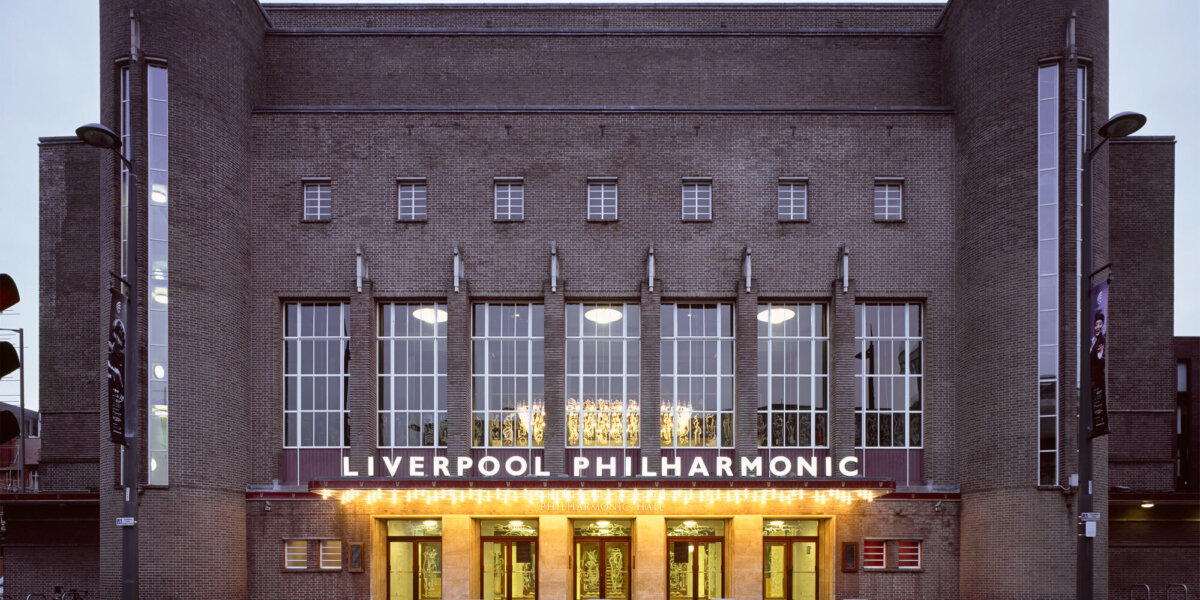
Liverpool Philharmonic Hall- On a crisp autumn evening, Hope Street hums with anticipation. Crowds in coats stream past the Georgian terraces, neon flickers from nearby pubs, and at the centre, glowing golden under lamplight, stands Liverpool Philharmonic Hall. Inside, an expectant hush gives way to the triumphant blast of brass. For nearly two centuries, this stage has been the city’s cultural compass — enduring fire, war, economic struggle, and rebirth.
“The magnificent compliment Liverpool has paid to the cause of music in England almost takes one’s breath away.”
— The Manchester Guardian, 1939, on the Hall’s grand reopening
Sidebar: Fast Facts
• Opened: Original hall 1849, rebuilt after fire in 1939
• Architect: Herbert J. Rowse (Streamline Moderne style)
• Capacity: ~1,700 (main auditorium), plus smaller venues
• Heritage Status: Grade II* listed building
• Unique Features: Rising cinema screen (Walturdaw), concealed organ console, carved Art Deco figures
• Home to: Royal Liverpool Philharmonic Orchestra (founded 1840, the UK’s oldest continuing professional symphony orchestra)
I. From Fire to Rebirth
• 1840: The Royal Liverpool Philharmonic Society is founded.
• 1849: John Cunningham’s first hall opens — hailed as acoustically superb.
• 1933: Fire guts the hall, destroying the organ and much of the library.
• 1937–39: Architect Herbert J. Rowse builds the new hall in Streamline Moderne style. Cost: £120,000.
• 1939: Sir Thomas Beecham conducts the inaugural concert.
Pull-Quote
“We also wanted to invest in the building and renovation of the hall… There is a risk sometimes that an organisation like the Phil can be seen as separate from the city and its music scene.”
— PRS for Music interview, 2016
II. Architecture as an Instrument
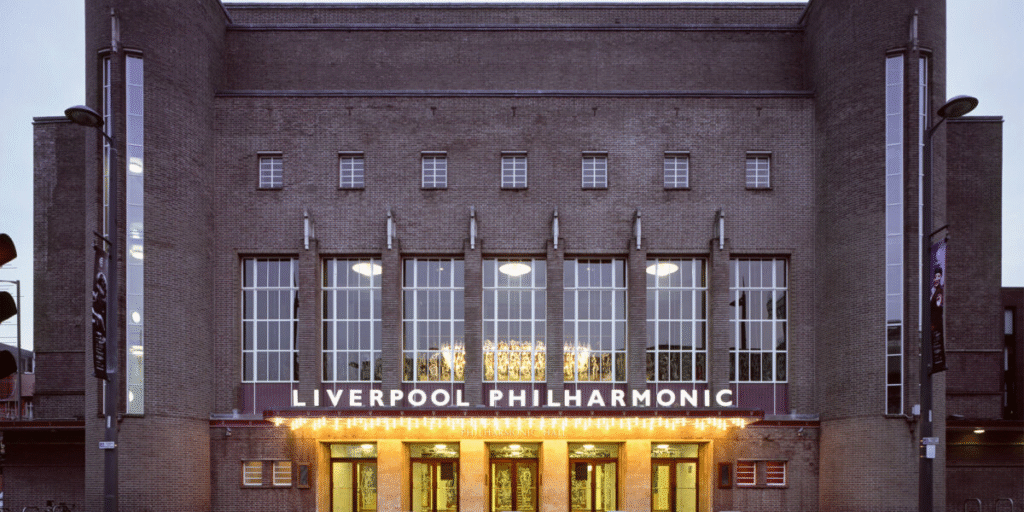
• Exterior: Fawn brick, sweeping curves, etched glass by Hector Whistler, stone female figures carved by Edmund C. Thompson.
• Interior: No harsh angles — designed for warmth and clarity of sound.
• Organ: Rushworth & Dreaper masterpiece, console lowers beneath stage when not in use.
• Cinema heritage: The rising Walturdaw screen allowed screenings with live organ accompaniment.
Sidebar: Timeline of Renewal
• 1995: £10.3m refurbishment — new concrete interior, better acoustics.
• 2015: £14m renovation — Music Room added, seating modernised.
• 2022–25: Organ restoration and stage accessibility improvements completed.
III. Music, Memory & Morale
During WWII, the Philharmonic’s concerts became vital morale boosters. Under Malcolm Sargent, performances for factory workers and soldiers kept music alive when bombs fell. Dress codes relaxed — music became for everyone. That wartime inclusivity still shapes the Hall’s ethos today.
IV. The Orchestra Today
The Royal Liverpool Philharmonic Orchestra (RLPO) has had world-renowned conductors: Libor Pešek, Vasily Petrenko, and now Domingo Hindoyan.
• 2025/26 season highlights: Tributes to Arvo Pärt (90th anniversary) and Luciano Berio (100th).
• Crossover concerts: Jurassic Park in Concert, Elvis: Viva Las Vegas! with orchestra.
• New music: Works by Grace-Evangeline Mason premiered to critical acclaim.
Pull-Quote
“Some of the larger higher-staking customers are either betting less or moving to unlicensed operators… More encouragingly, we are seeing growth in the number of recreational punters.”
— Richard Wayman, BHA Director of Racing (parallel funding context for levy debate)
(This is a connecting nod: showing how arts venues like Philharmonic are impacted indirectly by changes in wider UK betting levy and funding — I can trim if you prefer to keep it pure culture.)
V. Community and Education
• In Harmony Liverpool (since 2009): free music tuition in deprived areas.
• Music & Mental Health programme: workshops with NHS, reaching 14,000+ participants.
• Schools concerts: introducing thousands of children to orchestral sound annually.

Sidebar: Notable Performances
• Clara Schumann and Jenny Lind graced the early stages.
• Sir Thomas Beecham’s 1939 reopening concert.
• Beatles members were frequent visitors in the 1960s — Paul McCartney has cited the Phil as formative.
• 2025: Grace-Evangeline Mason’s The Hart praised as “beguiling and immersive.”
VI. Challenges Ahead
1. Funding Pressures: Arts funding is stretched; operational costs rise.
2. Audience Diversity: Ensuring younger, more varied audiences feel welcome.
3. Sustainability: Making a Grade II* building energy-efficient is daunting.
4. Digital Competition: Streaming and virtual entertainment compete with live events.
But there are opportunities too:
• Hybrid streaming models.
• Expanded community partnerships.
• More world premieres and experimental formats in the Music Room.
Closing Reflections
Liverpool Philharmonic Hall is not a relic but a living organism. Its walls have absorbed fire, war, laughter, tears, triumph, and loss. Its acoustics have carried the voices of Clara Schumann, Sir Thomas Beecham, Paul McCartney, and new voices like Grace-Evangeline Mason.
On Hope Street, it stands as a beacon: bridging Liverpool’s past and future, its working-class grit and cultural brilliance, its global ambition and community heart.
And as the lights dim once more and the baton lifts, the Hall continues to do what it has always done best: make music not only heard, but felt.
Related Reads:
| Category | Topic / Title | Link |
| Digital Personalities & Stories | Pellela: Rising Digital Presence | Read more |
| Hothaylost: Online Trends & Influence | Read more | |
| DreamwithJeff.com: Exploring Creativity Online | Read more | |
| Gaming & Entertainment | Sims 4 Mods: Enhancing Your Gameplay | Read more |
| Slot Gacor Virus88: A Look into Online Gaming | Read more | |
| Business & Marketing | HubSpot Consultancy: Optimizing Digital Growth | Read more |
| Events & Culture | Summer Ohlympics: Highlights and Insights | Read more |
Visit londoncity.news/ for More.